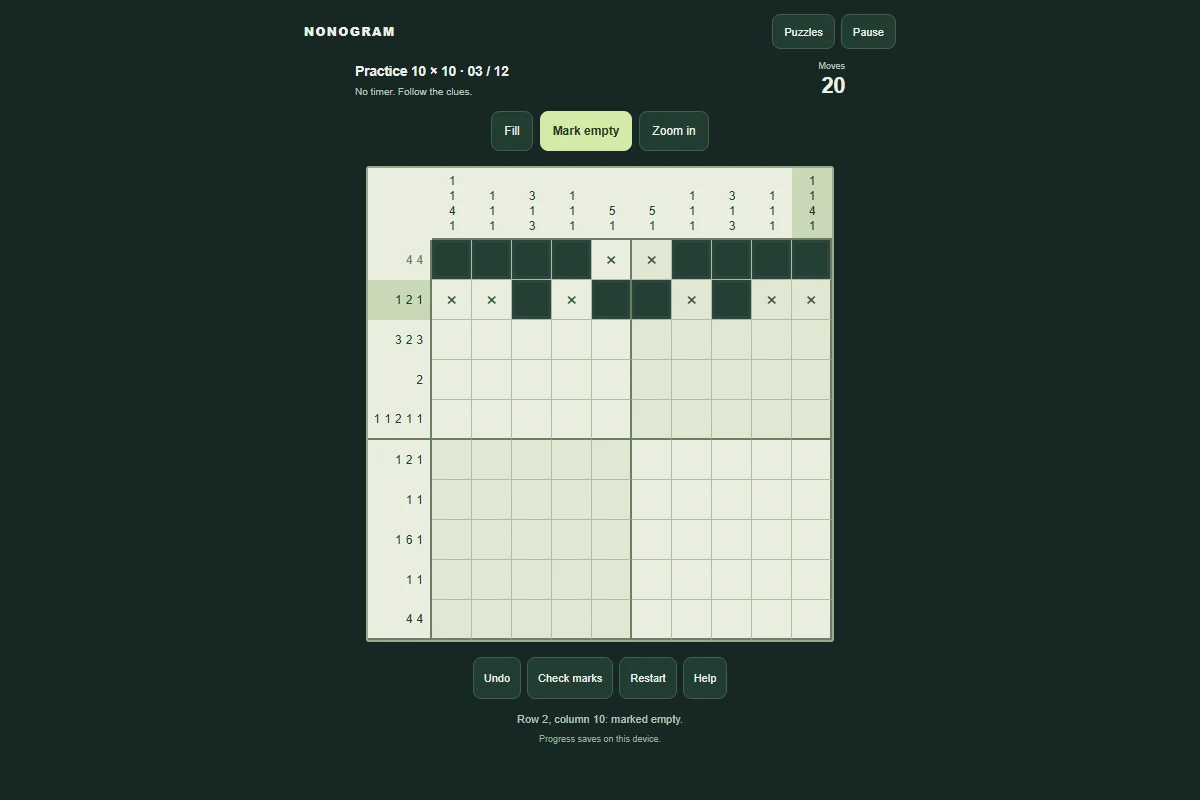
A 10×10 Nonogram, solved without guessing.
Start with lines that fit exactly. Use overlap to find more filled squares, then let the rows and columns narrow each other down. This walkthrough resolves all 100 squares in six stages.
Play this 10 × 10 puzzle| Row numbers and clues | C116 | C2221 | C3322 | C42113 | C5313 | C6313 | C72113 | C8322 | C9221 | C1016 |
|---|---|---|---|---|---|---|---|---|---|---|
| R11 6 1 | ? | ? | ? | ? | ? | ? | ? | ? | ? | ? |
| R28 | ? | ? | ? | ? | ? | ? | ? | ? | ? | ? |
| R33 2 3 | ? | ? | ? | ? | ? | ? | ? | ? | ? | ? |
| R41 1 1 1 | ? | ? | ? | ? | ? | ? | ? | ? | ? | ? |
| R51 1 1 1 | ? | ? | ? | ? | ? | ? | ? | ? | ? | ? |
| R610 | ? | ? | ? | ? | ? | ? | ? | ? | ? | ? |
| R72 2 | ? | ? | ? | ? | ? | ? | ? | ? | ? | ? |
| R81 4 1 | ? | ? | ? | ? | ? | ? | ? | ? | ? | ? |
| R96 | ? | ? | ? | ? | ? | ? | ? | ? | ? | ? |
| R108 | ? | ? | ? | ? | ? | ? | ? | ? | ? | ? |
The exact puzzle and rules
This is 10 × 10 practice puzzle 02 in the Puzzle Perch Nonogram game. It is a monochrome puzzle: every square is either filled or empty. The example is fixed; it is not today's daily puzzle.
Read row clues from left to right and column clues from top to bottom. Each number is one unbroken group of filled squares, with at least one empty square between groups. Extra empty squares may sit at either end. A question mark in our diagrams means undecided, not empty.
Rows run from R1 at the top to R10 at the bottom; columns run from C1 on the left to C10 on the right. Every new mark below follows from a clue and the marks already established. If the notation is new, begin with the complete 5 × 5 tutorial.
The complete 10 × 10 solution
Each diagram keeps the earlier deductions. The outlined squares are the marks added in that stage.
1. Start with rows that have no spare space
Add the filled groups and one empty square between each pair. If the total is 10, every group and gap has a fixed position.
- Row 1: 1 + 6 + 1 filled squares, plus two gaps, uses all 10. Fill columns 1, 3–8 and 10; mark 2 and 9 empty.
- Row 3: 3 + 2 + 3, plus two gaps, also uses 10. Fill columns 1–3, 5–6 and 8–10; mark 4 and 7 empty.
- Row 6 has a single clue of 10. Fill the entire row.
| Row numbers and clues | C116 | C2221 | C3322 | C42113 | C5313 | C6313 | C72113 | C8322 | C9221 | C1016 |
|---|---|---|---|---|---|---|---|---|---|---|
| R11 6 1 | Filled | × | Filled | Filled | Filled | Filled | Filled | Filled | × | Filled |
| R28 | ? | ? | ? | ? | ? | ? | ? | ? | ? | ? |
| R33 2 3 | Filled | Filled | Filled | × | Filled | Filled | × | Filled | Filled | Filled |
| R41 1 1 1 | ? | ? | ? | ? | ? | ? | ? | ? | ? | ? |
| R51 1 1 1 | ? | ? | ? | ? | ? | ? | ? | ? | ? | ? |
| R610 | Filled | Filled | Filled | Filled | Filled | Filled | Filled | Filled | Filled | Filled |
| R72 2 | ? | ? | ? | ? | ? | ? | ? | ? | ? | ? |
| R81 4 1 | ? | ? | ? | ? | ? | ? | ? | ? | ? | ? |
| R96 | ? | ? | ? | ? | ? | ? | ? | ? | ? | ? |
| R108 | ? | ? | ? | ? | ? | ? | ? | ? | ? | ? |
2. Fill the overlap, leaving the rest unknown
Compare the earliest and latest legal positions of a group. Fill only the squares it covers in every position. A square outside that overlap is not automatically empty.
- Row 2 has a run of 8. It can occupy columns 1–8, 2–9 or 3–10. All three cover columns 3–8, so fill those six squares.
- Row 10 also has a run of 8. Fill columns 3–8 for the same reason; leave columns 1–2 and 9–10 undecided.
- Row 9 has a run of 6, from as far left as 1–6 to as far right as 5–10. Its overlap is columns 5–6.
- Row 8 has clues 1, 4, 1. The middle run needs a singleton and a gap on each side. It can start only at column 3, 4 or 5, so it always covers columns 5–6.
| Row numbers and clues | C116 | C2221 | C3322 | C42113 | C5313 | C6313 | C72113 | C8322 | C9221 | C1016 |
|---|---|---|---|---|---|---|---|---|---|---|
| R11 6 1 | Filled | × | Filled | Filled | Filled | Filled | Filled | Filled | × | Filled |
| R28 | ? | ? | Filled | Filled | Filled | Filled | Filled | Filled | ? | ? |
| R33 2 3 | Filled | Filled | Filled | × | Filled | Filled | × | Filled | Filled | Filled |
| R41 1 1 1 | ? | ? | ? | ? | ? | ? | ? | ? | ? | ? |
| R51 1 1 1 | ? | ? | ? | ? | ? | ? | ? | ? | ? | ? |
| R610 | Filled | Filled | Filled | Filled | Filled | Filled | Filled | Filled | Filled | Filled |
| R72 2 | ? | ? | ? | ? | ? | ? | ? | ? | ? | ? |
| R81 4 1 | ? | ? | ? | ? | Filled | Filled | ? | ? | ? | ? |
| R96 | ? | ? | ? | ? | Filled | Filled | ? | ? | ? | ? |
| R108 | ? | ? | Filled | Filled | Filled | Filled | Filled | Filled | ? | ? |
3. Use the edge columns to fix both ends
Columns 1 and 10 each have clues 1, 6. Read these groups from top to bottom. Their known squares now fix both groups completely.
- Column 1: row 1 is filled, so it must be the first, single-square group. Row 2 is its gap. The filled square at row 3 then starts the run of 6, which fills rows 3–8. Mark rows 9–10 empty.
- Column 10 has the same clue and the same known squares at rows 1 and 3. Apply the same deduction: row 2 is empty, rows 3–8 are filled, and rows 9–10 are empty.
| Row numbers and clues | C116 | C2221 | C3322 | C42113 | C5313 | C6313 | C72113 | C8322 | C9221 | C1016 |
|---|---|---|---|---|---|---|---|---|---|---|
| R11 6 1 | Filled | × | Filled | Filled | Filled | Filled | Filled | Filled | × | Filled |
| R28 | × | ? | Filled | Filled | Filled | Filled | Filled | Filled | ? | × |
| R33 2 3 | Filled | Filled | Filled | × | Filled | Filled | × | Filled | Filled | Filled |
| R41 1 1 1 | Filled | ? | ? | ? | ? | ? | ? | ? | ? | Filled |
| R51 1 1 1 | Filled | ? | ? | ? | ? | ? | ? | ? | ? | Filled |
| R610 | Filled | Filled | Filled | Filled | Filled | Filled | Filled | Filled | Filled | Filled |
| R72 2 | Filled | ? | ? | ? | ? | ? | ? | ? | ? | Filled |
| R81 4 1 | Filled | ? | ? | ? | Filled | Filled | ? | ? | ? | Filled |
| R96 | × | ? | ? | ? | Filled | Filled | ? | ? | ? | × |
| R108 | × | ? | Filled | Filled | Filled | Filled | Filled | Filled | ? | × |
4. Close the groups in the central columns
The middle columns contain enough known filled squares to place every group. Once a group is complete, its separating squares must be empty.
- Column 4 has clues 2, 1, 1, 3. Rows 1–2 complete the first 2. Because row 10 is filled, the final 3 must occupy rows 8–10. The two singletons fit between them only at rows 4 and 6: row 6 is already filled, so rows 5 and 7 are gaps.
- Column 7 has the same 2, 1, 1, 3 clue and known squares. Fill rows 4, 8 and 9; mark rows 5 and 7 empty.
- Column 5 has clues 3, 1, 3. Rows 1–3, row 6, and rows 8–10 already supply those groups. Mark rows 4, 5 and 7 empty.
- Column 6 has the same three completed groups as column 5. Mark rows 4, 5 and 7 empty here too.
| Row numbers and clues | C116 | C2221 | C3322 | C42113 | C5313 | C6313 | C72113 | C8322 | C9221 | C1016 |
|---|---|---|---|---|---|---|---|---|---|---|
| R11 6 1 | Filled | × | Filled | Filled | Filled | Filled | Filled | Filled | × | Filled |
| R28 | × | ? | Filled | Filled | Filled | Filled | Filled | Filled | ? | × |
| R33 2 3 | Filled | Filled | Filled | × | Filled | Filled | × | Filled | Filled | Filled |
| R41 1 1 1 | Filled | ? | ? | Filled | × | × | Filled | ? | ? | Filled |
| R51 1 1 1 | Filled | ? | ? | × | × | × | × | ? | ? | Filled |
| R610 | Filled | Filled | Filled | Filled | Filled | Filled | Filled | Filled | Filled | Filled |
| R72 2 | Filled | ? | ? | × | × | × | × | ? | ? | Filled |
| R81 4 1 | Filled | ? | ? | Filled | Filled | Filled | Filled | ? | ? | Filled |
| R96 | × | ? | ? | Filled | Filled | Filled | Filled | ? | ? | × |
| R108 | × | ? | Filled | Filled | Filled | Filled | Filled | Filled | ? | × |
5. Keep two possible pairs, but take what they share
Columns 3 and 8 each have clues 3, 2, 2. We cannot yet place the middle pair exactly. We can still resolve the squares that agree in both possibilities.
- Column 3: rows 1–3 form the first group, so row 4 is empty. The last pair must be rows 9–10 because row 10 is filled. The middle pair includes row 6, so it is either rows 5–6 or 6–7. Both choices leave row 8 empty. Fill row 9; leave rows 5 and 7 unknown.
- Column 8 has the same clue and known squares. Mark rows 4 and 8 empty, fill row 9, and keep rows 5 and 7 undecided.
| Row numbers and clues | C116 | C2221 | C3322 | C42113 | C5313 | C6313 | C72113 | C8322 | C9221 | C1016 |
|---|---|---|---|---|---|---|---|---|---|---|
| R11 6 1 | Filled | × | Filled | Filled | Filled | Filled | Filled | Filled | × | Filled |
| R28 | × | ? | Filled | Filled | Filled | Filled | Filled | Filled | ? | × |
| R33 2 3 | Filled | Filled | Filled | × | Filled | Filled | × | Filled | Filled | Filled |
| R41 1 1 1 | Filled | ? | × | Filled | × | × | Filled | × | ? | Filled |
| R51 1 1 1 | Filled | ? | ? | × | × | × | × | ? | ? | Filled |
| R610 | Filled | Filled | Filled | Filled | Filled | Filled | Filled | Filled | Filled | Filled |
| R72 2 | Filled | ? | ? | × | × | × | × | ? | ? | Filled |
| R81 4 1 | Filled | ? | × | Filled | Filled | Filled | Filled | × | ? | Filled |
| R96 | × | ? | Filled | Filled | Filled | Filled | Filled | Filled | ? | × |
| R108 | × | ? | Filled | Filled | Filled | Filled | Filled | Filled | ? | × |
6. Return to the rows and resolve the remaining squares
The column deductions have removed the remaining choices. Check each unfinished row against its own clues; no guess about the picture is needed.
- Row 2: columns 1 and 10 are empty. Its run of 8 must occupy columns 2–9, so fill columns 2 and 9.
- Row 10 has the same empty ends and clue 8. Fill columns 2 and 9.
- Row 8: the singleton at column 1, the run at 4–7, and the singleton at 10 complete 1, 4, 1. Mark columns 2 and 9 empty.
- Row 9: the six filled squares at columns 3–8 complete its clue 6. Mark columns 2 and 9 empty.
- Row 4: columns 1, 4, 7 and 10 already supply its four singletons. Mark columns 2 and 9 empty.
- Row 5 needs four singletons. Columns 1 and 10 are filled, so their neighbours 2 and 9 must be empty. Columns 4–7 are empty, leaving only columns 3 and 8 for the other two singletons. Fill them.
- Row 7 needs two pairs. The filled ends at columns 1 and 10 force pairs at 1–2 and 9–10. Fill columns 2 and 9, then mark columns 3 and 8 empty.
| Row numbers and clues | C116 | C2221 | C3322 | C42113 | C5313 | C6313 | C72113 | C8322 | C9221 | C1016 |
|---|---|---|---|---|---|---|---|---|---|---|
| R11 6 1 | Filled | × | Filled | Filled | Filled | Filled | Filled | Filled | × | Filled |
| R28 | × | Filled | Filled | Filled | Filled | Filled | Filled | Filled | Filled | × |
| R33 2 3 | Filled | Filled | Filled | × | Filled | Filled | × | Filled | Filled | Filled |
| R41 1 1 1 | Filled | × | × | Filled | × | × | Filled | × | × | Filled |
| R51 1 1 1 | Filled | × | Filled | × | × | × | × | Filled | × | Filled |
| R610 | Filled | Filled | Filled | Filled | Filled | Filled | Filled | Filled | Filled | Filled |
| R72 2 | Filled | Filled | × | × | × | × | × | × | Filled | Filled |
| R81 4 1 | Filled | × | × | Filled | Filled | Filled | Filled | × | × | Filled |
| R96 | × | × | Filled | Filled | Filled | Filled | Filled | Filled | × | × |
| R108 | × | Filled | Filled | Filled | Filled | Filled | Filled | Filled | Filled | × |
Check the answer against the clues
Read each completed row and column as groups again. For example, column 3 is now a run of 3, a gap, a run of 2, two gaps, then a run of 2: its clue is exactly 3, 2, 2. Row 5 has four separated single squares, matching 1, 1, 1, 1.
This puzzle has one solution, and every mark above is forced by the remaining placements of its line. Other 10 × 10 puzzles can require different deductions; this sequence is specific to practice puzzle 02. When a line still has several possibilities, keep only what they all agree on and check a crossing line.
The game completes this board once every correct filled square is filled and there are no extra fills. Empty marks are optional for winning. The walkthrough marks them all so you can follow the complete reasoning.